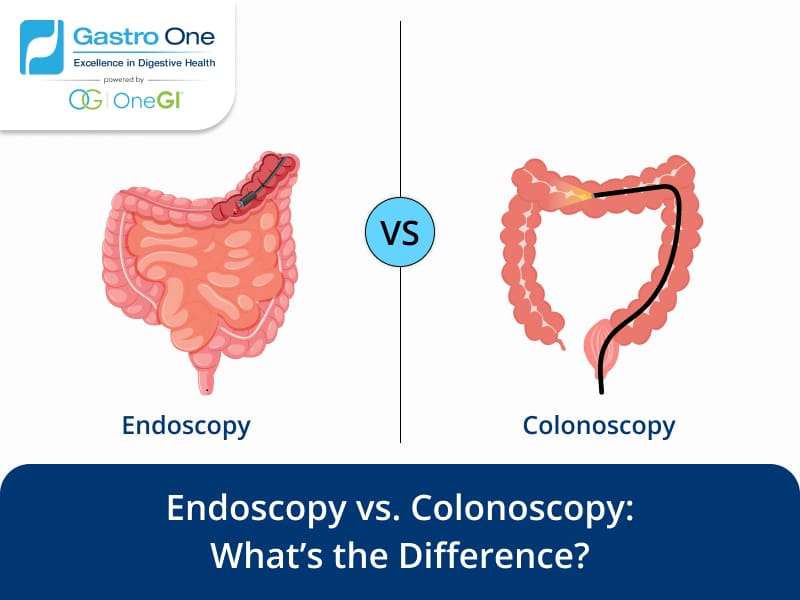
When your doctor recommends an endoscopy or a colonoscopy, it is natural to wonder how these procedures are different. Both tests use a flexible camera to examine the digestive system, but they focus on different areas.
An upper endoscopy examines the esophagus, stomach, and upper small intestine, while a colonoscopy examines the colon and rectum. The right procedure depends on your symptoms, medical history, and screening needs.
Understanding the difference between endoscopy vs colonoscopy can help you feel more prepared when discussing digestive health concerns with your gastroenterologist.
Table of Contents
Endoscopy vs. Colonoscopy: Quick Comparison
The main difference between endoscopy and colonoscopy is the part of the digestive system being examined. Upper endoscopy evaluates the upper digestive tract, while colonoscopy evaluates the colon and rectum.
| Feature | Upper Endoscopy | Colonoscopy |
| Area examined | Esophagus, stomach, and duodenum | Rectum and entire colon |
| Medical name | EGD (esophagogastroduodenoscopy) | Colonoscopy |
| Scope entry point | Through the mouth | Through the rectum |
| Common reasons | Heartburn, swallowing problems, ulcers, stomach discomfort | Colon cancer screening, bleeding, bowel changes |
| Preparation | Fasting before procedure | Bowel cleansing preparation |
| Biopsy possible | Yes | Yes |
| Treatment during procedure | Some abnormal tissue can be treated | Polyps may be removed |
Both procedures allow gastroenterologists to examine the digestive tract without traditional surgery. However, they answer different medical questions based on the area being evaluated.
Is a Colonoscopy a Type of Endoscopy?
Yes, a colonoscopy is technically a type of endoscopic procedure because it uses a flexible camera to examine the inside of the body. However, “endoscopy” often refers specifically to an upper endoscopy that examines the upper digestive tract.
The term endoscopy describes a group of procedures that use a scope to view internal organs. In gastroenterology, this includes:
- Upper endoscopy (EGD): Examines the esophagus, stomach, and duodenum
- Colonoscopy: Examines the colon and rectum
This difference explains why people often search for colonoscopy vs endoscopy. Although these procedures use similar technology, they are designed to evaluate different parts of the digestive system.
What Is an Upper Endoscopy?
An upper endoscopy is a procedure that uses a flexible camera to examine the upper digestive tract, including the esophagus, stomach, and first part of the small intestine. It is commonly used to investigate symptoms affecting the upper digestive system.
During an upper endoscopy, a gastroenterologist guides the endoscope through the mouth to view the digestive lining. If needed, small tissue samples can be collected for further evaluation.
Doctors may recommend an upper endoscopy for symptoms such as:
- Persistent acid reflux or heartburn
- Difficulty swallowing
- Unexplained nausea or vomiting
- Upper abdominal pain
- Suspected ulcers
- Signs of upper digestive bleeding
The procedure can help identify conditions such as inflammation, ulcers, and other abnormalities.
For additional information about conditions identified during this procedure, Gastro One explains what diseases can be detected by an endoscopy and how doctors use endoscopy for diagnosis.
What Is a Colonoscopy?
A colonoscopy is a procedure that examines the inside of the colon and rectum using a flexible camera. It is commonly used to investigate digestive symptoms, detect abnormalities, and screen for colorectal cancer.
During a colonoscopy, the physician guides a colonoscope through the rectum to examine the large intestine. If polyps or abnormal areas are found, they may be removed or biopsied during the same procedure.
Doctors commonly recommend colonoscopy for:
- Colorectal cancer screening
- Blood in stool
- Rectal bleeding
- Changes in bowel habits
- Unexplained abdominal symptoms
- Monitoring previously identified polyps
One of the biggest benefits of colonoscopy is its preventive role. Certain polyps can develop into colorectal cancer over time, and removing them may help reduce future risk.
A screening colonoscopy allows doctors to identify potential concerns before symptoms develop. Screening recommendations depend on factors such as age, family history, and personal risk.
The U.S. Preventive Services Task Force provides colorectal cancer screening recommendations based on age and individual risk factors.
Endoscopy vs. Colonoscopy: Which One Matches Your Symptoms?
Doctors choose between an endoscopy and colonoscopy based on where symptoms may originate. Upper digestive symptoms often require an endoscopy, while colonoscopy is commonly used for lower digestive symptoms and colorectal screening.
| Symptoms or Concern | Procedure Doctors May Consider |
| Frequent heartburn or reflux | Upper endoscopy |
| Difficulty swallowing | Upper endoscopy |
| Upper abdominal discomfort | Upper endoscopy |
| Possible stomach ulcer | Upper endoscopy |
| Blood in stool | Colonoscopy |
| Rectal bleeding | Colonoscopy |
| Changes in bowel habits | Colonoscopy |
| Colorectal cancer screening | Colonoscopy |
Symptoms provide important clues, but they do not determine the procedure on their own. Doctors also consider medical history, medications, family history, previous test results, and overall health risks.
How Is Preparation Different for Endoscopy and Colonoscopy?
The biggest preparation difference between endoscopy and colonoscopy is that endoscopy usually requires fasting, while colonoscopy requires bowel cleansing to clear the colon before examination.
Preparing for an Upper Endoscopy
Preparation usually involves avoiding food and drinks for a specific period before the procedure. This allows the physician to clearly examine the upper digestive tract.
Patients may also discuss:
- Current medications
- Blood thinners
- Existing medical conditions
Preparing for a Colonoscopy
Colonoscopy requires more preparation because the colon must be completely clear for accurate examination.
Preparation may include:
- Following dietary restrictions
- Drinking a bowel-cleansing solution
- Adjusting medications if instructed
Proper preparation improves visibility and helps doctors identify smaller abnormalities.
What Happens During an Endoscopy and Colonoscopy?
Both procedures use a flexible scope and are commonly performed with sedation for patient comfort. The main difference is the route used to examine the digestive system.
During an Upper Endoscopy:
- Medication is provided to help with comfort.
- The endoscope passes through the mouth.
- The doctor examines the esophagus, stomach, and duodenum.
- Biopsies may be collected if needed.
- The scope is removed.
During a Colonoscopy:
- Sedation is provided.
- The colonoscope passes through the rectum.
- The doctor examines the colon lining.
- Polyps or abnormal tissue may be removed.
- The patient is monitored during recovery.
The American Society for Gastrointestinal Endoscopy explains that endoscopic procedures allow physicians to both diagnose and treat certain digestive conditions by directly viewing internal structures.
Can You Have an Endoscopy and Colonoscopy at the Same Time?
Yes, some patients may have an endoscopy and colonoscopy during the same appointment when doctors need to evaluate symptoms involving both the upper and lower digestive systems.
Doctors may recommend colonoscopy and endoscopy together when symptoms do not clearly point to one area of the digestive tract.
Examples include:
- Unexplained anemia
- Digestive bleeding
- Multiple gastrointestinal symptoms
- Complex diagnostic evaluations
Having both procedures together may provide a more complete evaluation while reducing the need for separate appointments.
Is Endoscopy or Colonoscopy More Uncomfortable?
Most patients tolerate both procedures well because sedation is commonly used. The main difference patients notice is often the preparation process rather than the procedure itself.
After the procedure, some people may experience:
- Mild bloating after colonoscopy
- Temporary throat irritation after upper endoscopy
- Sleepiness from sedation
Recovery instructions vary depending on the procedure and individual health factors.
Questions to Ask Before Your Procedure
Asking questions before an endoscopy or colonoscopy helps patients understand why the procedure is needed, what preparation involves, and what to expect afterward.
Helpful questions include:
- Why is this procedure recommended?
- Which part of my digestive system will be examined?
- What preparation steps should I follow?
- Will biopsies be taken?
- When will I receive results?
- Are there medications I should adjust?
- What symptoms should I report after the procedure?
Being informed can help reduce uncertainty and make the experience more comfortable.
Key Takeaways
- Endoscopy and colonoscopy examine different areas of the digestive system.
- Upper endoscopy evaluates the esophagus, stomach, and upper small intestine.
- Colonoscopy examines the colon and rectum.
- Colonoscopy plays an important role in colorectal cancer screening and prevention.
- Both procedures can diagnose and sometimes treat digestive conditions.
- Doctors recommend procedures based on symptoms, health history, and risk factors.
The Right Digestive Screening Starts With the Right Procedure. Seek Expert Consultation As Your Next Step!
Understanding the difference between endoscopy vs colonoscopy can help you feel more confident when discussing digestive health concerns. While both procedures use advanced scope technology, each serves a specific purpose: upper endoscopy evaluates the upper digestive tract, while colonoscopy focuses on the colon and rectum.
At Gastro One, our focus is helping patients understand their digestive health through expert evaluation, preventive screenings, and personalized care plans. Better understanding leads to better decisions, and informed patients are better prepared for better health outcomes.
If you have questions about digestive symptoms, screening options, or whether an endoscopy or colonoscopy may be appropriate for you, speak with our expert gastroenterologists today.
FAQs
Is a colonoscopy better than an endoscopy?
Neither procedure is better because they examine different parts of the digestive system. An endoscopy evaluates the upper digestive tract, while a colonoscopy examines the colon and rectum. The appropriate test depends on symptoms, health history, and screening needs.
Can an endoscopy detect colon problems?
No. An upper endoscopy cannot examine the colon because it evaluates the esophagus, stomach, and upper small intestine. Colon problems, including polyps and colorectal abnormalities, are evaluated through colonoscopy.
Which takes longer, an endoscopy or colonoscopy?
Both procedures are usually completed within a short timeframe, but total appointment time depends on preparation, sedation recovery, and additional procedures. Colonoscopy preparation generally requires more time because the colon must be cleared beforehand.
Can you eat normally after an endoscopy or colonoscopy?
Most patients can gradually return to their normal diet unless their doctor provides different instructions. Some people may experience temporary bloating, throat discomfort, or digestive changes after the procedure.