
At Gastro One, we understand that managing celiac disease can feel overwhelming. However, with the right support and guidance, you can lead a healthy, active life while managing this condition. Celiac disease requires a lifelong, strict gluten-free diet to prevent immune reactions and heal the small intestine.
In this guide, we’ll walk you through the essential steps to managing celiac disease, including diet, treatment, and lifestyle adjustments to help you live your best life. If you’re feeling uncertain or need personalized guidance, don’t hesitate to schedule an appointment with us. We’re here to help.
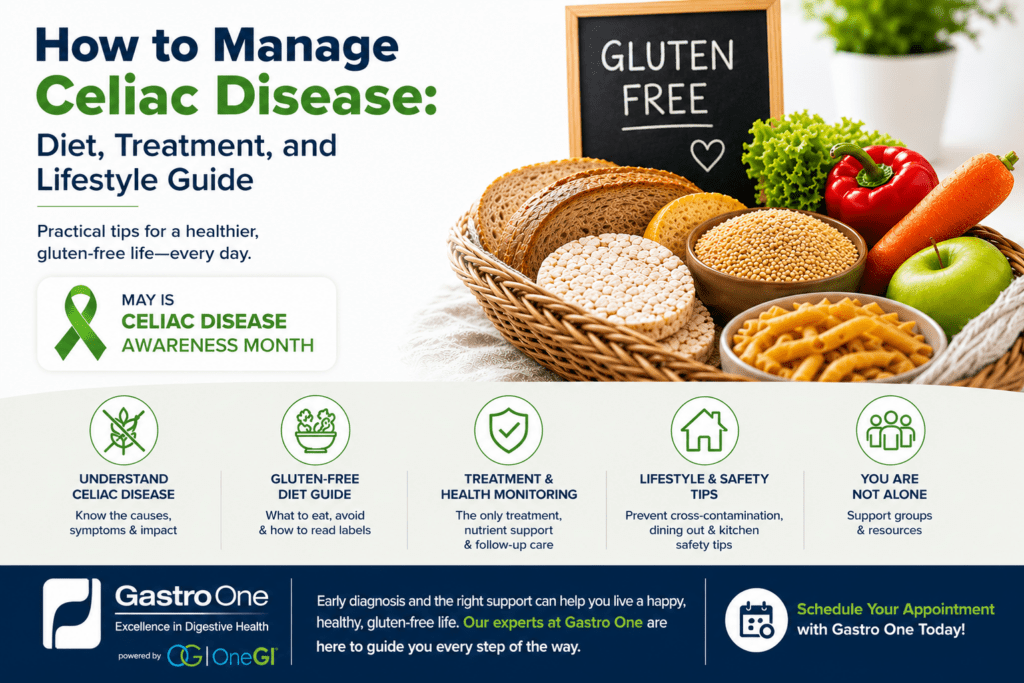
As Celiac Disease Awareness Month reminds us, it’s important to raise awareness about the challenges individuals with celiac disease face daily. This month is an opportunity to educate ourselves, share experiences, and strengthen the support network for those affected.
Recognizing early warning signs of gastrointestinal disease is one of the most important steps toward getting a timely diagnosis. At Gastro One, we’re proud to be part of this initiative and committed to providing top-notch care to those living with celiac disease.
Table of Contents
What Is Celiac Disease and Why Does It Matter
Celiac disease is an autoimmune disorder that causes your body to react negatively to gluten, a protein found in wheat, barley, and rye. This immune response damages your small intestine, leading to malabsorption of nutrients and a host of other complications.
While there’s no cure for celiac disease, the good news is that you can manage the condition effectively with a lifelong gluten-free diet. At Gastro One, we are committed to helping you understand and navigate the changes necessary to live well with celiac disease.
The Gluten-Free Diet: What You Can Eat and What to Avoid
Managing celiac disease begins with following a strict gluten-free diet. Here’s what you need to know to make informed decisions about your meals:
What to Avoid:
- Wheat, Barley, and rye: These grains contain gluten and must be completely avoided. You’ll need to eliminate foods like bread, pasta, cereals, and beer from your diet.
- Processed Foods: Soy sauce, salad dressings, soups, and many processed foods can contain hidden gluten. Always read the labels carefully or prepare meals at home.
- Cross-Contamination: Even small amounts of gluten can cause damage. Avoid cross-contamination in your kitchen by using separate utensils, cutting boards, and toasters for gluten-free foods.
What to Eat:
- Naturally Gluten-Free Foods: You can enjoy fresh meats, fish, fruits, vegetables, rice, potatoes, and lentils, all of which are naturally gluten-free and safe for you.
- Safe Grains: Incorporate quinoa, rice, corn, tapioca, and certified gluten-free oats into your meals. These grains are not only safe but also nutritious alternatives to wheat and barley.
- Whole Foods: Stick to whole, unprocessed foods as much as possible. They are less likely to contain hidden gluten and are better for your overall health.
Label Reading:
Reading labels is essential. Always look for foods labeled as “gluten-free” and check for any possible cross-contamination warnings. Certified gluten-free foods are the safest option for managing celiac disease.
Treatment and Health Monitoring for Celiac Disease
No medication can cure celiac disease, but the disease can be effectively managed through diet and regular health monitoring. Here’s how we help you stay on track:
-
The Strict Gluten-Free Diet:
The gluten-free diet is the cornerstone of managing celiac disease. Even trace amounts of gluten can cause significant damage to your intestines, so it’s essential to avoid gluten completely.
-
Nutrient Replenishment:
Celiac disease can lead to deficiencies in iron, calcium, vitamin D, and B12 because of malabsorption – a digestive disruption also seen in other common GI disorders that affect nutrient absorption. We can work with you to ensure you’re getting the right supplements to make up for these deficiencies.
-
Regular Check-Ups:
Regular check-ups with our team are key to tracking your health and progress. We’ll monitor how your body is healing, check for potential nutrient deficiencies, and help you adjust your diet and treatment plan as needed.
-
Dermatitis Herpetiformis:
If you experience dermatitis herpetiformis, an itchy skin rash often linked to celiac disease, additional treatment may be necessary. Special medications like dapsone can help manage the rash, along with the required gluten-free diet.
Lifestyle Changes and Preventing Cross-Contamination
Along with following a gluten-free diet, there are lifestyle changes that you’ll need to make to prevent gluten exposure. At Gastro One, we’ll guide you through these changes to make them as seamless as possible:
-
Kitchen Safety:
In your kitchen, we’ll help you set up systems to prevent cross-contamination. This includes using separate utensils, cutting boards, and toasters for gluten-free foods. We’ll also guide you on cleaning surfaces thoroughly after preparing gluten-containing foods.
-
Dining Out:
When you eat out, always inform the restaurant staff about your celiac disease. Ask about how food is prepared and if there’s any risk of cross-contamination. We can provide you with tips on how to safely navigate eating at restaurants without compromising your health.
-
Support Groups:
Living with celiac disease can feel isolating, but joining support groups like the Celiac Disease Foundation or NIDDK can provide emotional support and helpful resources.
Common Pitfalls to Avoid
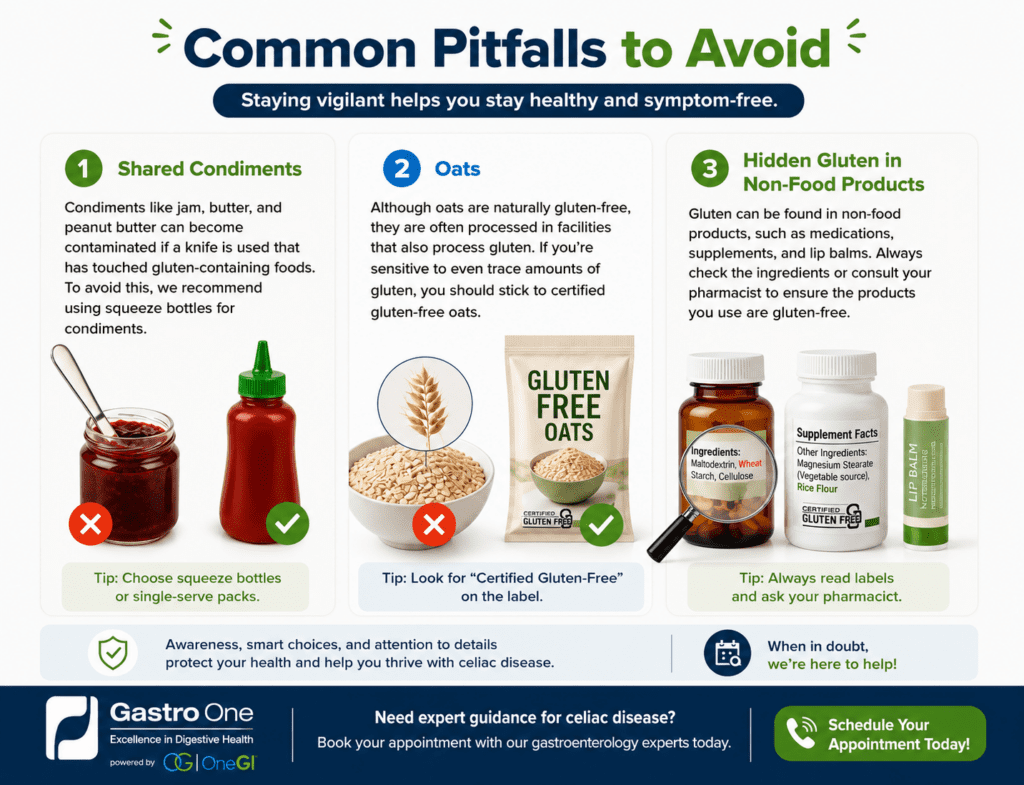
Managing celiac disease requires vigilance, but you can avoid common pitfalls by following these tips:
-
Shared Condiments:
Condiments like jam, butter, and peanut butter can become contaminated if a knife is used that has touched gluten-containing foods. To avoid this, we recommend using squeeze bottles for condiments.
-
Oats:
Although oats are naturally gluten-free, they are often processed in facilities that also process gluten. If you’re sensitive to even trace amounts of gluten, you should stick to certified gluten-free oats.
-
Hidden Gluten in Non-Food Products:
Gluten can be found in non-food products, such as medications, supplements, and lip balms. Always check the ingredients or consult your pharmacist to ensure the products you use are gluten-free.
Key Takeaways
- A gluten-free diet is the only treatment for celiac disease, and it must be followed strictly.
- Avoid wheat, barley, and rye, and enjoy naturally gluten-free foods like fresh meats, vegetables, and gluten-free grains.
- Consult with a dietitian to ensure a well-rounded, nutrient-rich diet and manage deficiencies.
- Prevent cross-contamination at home and when dining out to avoid accidental gluten exposure.
- Regular check-ups with your doctor will help monitor your health and progress.
Get Expert Guidance and Specialized Celiac Disease Treatment at Gastro One. Contact Us Today!
Living with celiac disease doesn’t have to be overwhelming. With the right diet, lifestyle changes, and ongoing support, you can manage your condition effectively and lead a fulfilling life. If you need help or have any questions, Gastro One is here to provide expert guidance and support tailored to your needs. Schedule an appointment with us today, and let’s work together to ensure your health and well-being.
Frequently Asked Questions
How long does it take for the gut to heal after starting a gluten-free diet?
While symptoms often improve within weeks, complete intestinal healing typically takes several months for children and up to two years for adults. Consistent, strict adherence is vital for full recovery.
Can celiac disease be passed on to my children?
Yes, it has a strong genetic component. If a first-degree relative has celiac disease, there is a 1 in 10 chance of developing it. Genetic testing can help rule out susceptibility.
What is the difference between celiac disease and gluten intolerance?
Celiac disease is a serious autoimmune condition causing permanent intestinal damage and malabsorption. Gluten intolerance (non-celiac gluten sensitivity) causes similar digestive distress but does not result in the same long-term organ damage.
Should I go gluten-free before getting tested for celiac disease?
No. You must continue consuming gluten daily for several weeks before testing. Eliminating gluten beforehand can cause “false negative” results, as your body stops producing the antibodies used to diagnose the condition.