
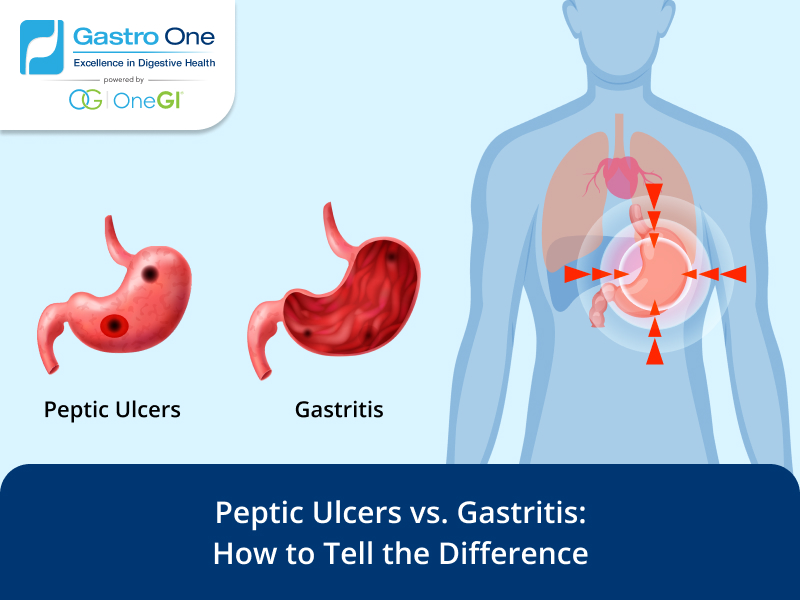
Stomach pain is a common issue for many people. Two frequent causes of this discomfort are peptic ulcers and gastritis. These conditions share similar symptoms and causes. This makes them difficult to tell apart without medical help. Understanding the basics helps you know when to seek professional care.
Table of Contents
What Are Peptic Ulcers?
Peptic ulcers are open sores that develop on the inside lining of your stomach or the upper portion of your small intestine. This upper part of the small intestine is known as the duodenum. They are among the top digestive disorders and stomach problems treated by gastroenterologists today.
Common Causes of Ulcers
Two main factors cause most peptic ulcers. The first is an infection with Helicobacter pylori (H. pylori) bacteria. The second is long-term use of nonsteroidal anti-inflammatory drugs (NSAIDs). Common NSAIDs include aspirin and ibuprofen. Stress and spicy foods do not cause ulcers. However, these factors make symptoms worse.
Peptic Ulcer Symptoms
Many people with ulcers have no symptoms at all. When symptoms of a peptic ulcer do occur, they include:
- Burning stomach pain
- Feeling full too soon while eating
- Bloating and belching
- Intolerance to fatty foods
- Nausea
These symptoms can sometimes overlap with other upper GI conditions, including acid reflux. If you experience persistent discomfort, it may be helpful to learn more about GERD symptoms and available treatment options to better understand your digestive health.
What Is Gastritis?
Gastritis refers to inflammation of the protective lining of the stomach. This inflammation is often the result of the same bacteria that cause most stomach ulcers.
Common Causes of Gastritis
The most common causes of gastritis are the same as ulcers: H. pylori infection and regular use of pain relievers. Excessive alcohol use also contributes to this inflammation. Severe stress from major surgery or traumatic injury causes a specific type known as stress gastritis.
Gastritis Symptoms
Gastritis signs vary greatly. Some people experience no noticeable issues. When gastric symptoms appear, they typically include:
- Gnawing or burning ache in the upper abdomen
- Nausea and vomiting
- A feeling of fullness in the upper abdomen after eating
Key Differences Between the Conditions
Distinguishing between these two conditions is challenging because their symptoms overlap significantly. Both cause upper abdominal pain, nausea, and a feeling of fullness.
The timing of the pain provides a clue. Ulcer pain often changes based on when you eat. For gastric ulcers (in the stomach), eating sometimes worsens the pain. For duodenal ulcers (in the intestine), eating often relieves the pain for a short time. This pain frequently returns two to three hours after eating. It also tends to occur at night when the stomach is empty. Gastritis pain does not always follow such a specific pattern.
Diagnosis and Treatment
Persistent stomach pain requires a doctor’s attention. You should see a gastroenterologist if you have indigestion that lasts longer than a week. During your visit, your doctor will likely ask about your symptoms, get your family’s medical history, and inquire about your diet and lifestyle. They may also ask you to keep a food journal to track what you eat and how it affects your symptoms.
Seek immediate care if you vomit blood or notice black, tarry stools. These are possible signs of internal bleeding.
Medical Tests
Doctors use several tests to find the cause of your discomfort. They test for H. pylori using breath, stool, or blood tests. An endoscopy allows the doctor to look directly at your stomach lining using a small camera. During this procedure, they take a biopsy to check for inflammation or bacteria.
Treating the Problem
Treatment depends on the cause. If an infection is present, doctors prescribe antibiotics to kill the bacteria. Other medications reduce stomach acid to allow the lining to heal. These include proton pump inhibitors and acid blockers. If NSAIDs are the cause, your doctor may advise you to stop taking them.
Know When to Get Help
Peptic ulcers and gastritis are distinct conditions with different effects on your digestive system. While they share causes like H. pylori and pain relievers, ulcers are open sores, while gastritis is inflammation. Proper diagnosis ensures you receive the right treatment to heal your stomach and prevent complications.
Schedule a Consultation with a Gastroenterologist
If you’re experiencing persistent symptoms such as abdominal pain, nausea, bloating, or irregular digestion, it’s crucial to schedule a consultation with a gastroenterologist. These specialists can accurately diagnose and differentiate between conditions like peptic ulcers and gastritis, ensuring you receive the appropriate care. Early intervention helps prevent complications and improves your quality of life, so don’t hesitate to seek professional advice.