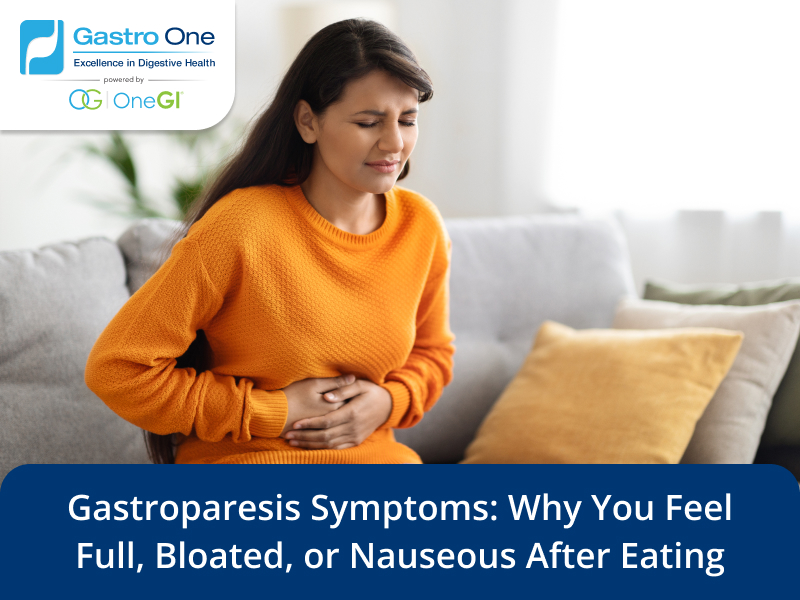
Feeling full after eating a small amount of food, experiencing bloating after eating, or dealing with nausea after eating can affect your comfort and daily routine. While these symptoms may occur for many reasons, they may sometimes be associated with gastroparesis, a digestive condition that affects how quickly food moves through the stomach.
Gastroparesis Symptoms are often connected to delayed stomach emptying, which means food remains in the stomach longer than expected before moving into the small intestine.
At Gastro One, we understand that ongoing digestive symptoms can impact your quality of life. Learning more about what gastroparesis is, common symptoms, possible causes, and when to seek medical guidance can help you take a more informed approach to your digestive health.
Table of Contents
What Is Gastroparesis?
Gastroparesis is a digestive condition where the stomach empties food more slowly than normal.
Normally, the muscles and nerves of the stomach work together to move food through the digestive system. When this process is affected, food may remain in the stomach longer than expected, which can contribute to symptoms such as fullness, bloating after eating, and nausea after eating.
This condition is also described as delayed stomach emptying because food moves from the stomach into the small intestine at a slower pace than expected.
Gastroparesis Symptoms can vary from person to person. Some individuals may experience occasional discomfort, while others may notice symptoms that affect eating habits, daily activities, or overall well-being.
According to the National Institute of Diabetes and Digestive and Kidney Diseases (NIDDK), gastroparesis may cause digestive symptoms related to slower stomach movement and changes in how food moves through the digestive tract.
Common Gastroparesis Symptoms
The most common Gastroparesis symptoms are related to how your stomach feels before, during, and after meals.
Common symptoms may include:
- Feeling full quickly after beginning a meal
- Feeling full for a long time after eating
- Nausea after eating
- Bloating after eating
- Abdominal discomfort
- Reduced appetite
| Symptom | How It May Be Related to Gastroparesis |
|---|---|
| Feeling full quickly | Food may remain in the stomach longer than expected |
| Fullness that continues after meals | Delayed stomach emptying may slow digestion |
| Nausea after eating | Food staying in the stomach longer may contribute to discomfort |
| Bloating after eating | Slower movement of stomach contents may create a feeling of fullness |
| Abdominal discomfort | Changes in stomach movement may contribute to discomfort |
| Reduced appetite | Ongoing symptoms may make eating less comfortable |
Some people may notice these symptoms more often after larger meals, while others may experience discomfort even after eating smaller portions.
Keeping track of symptoms, meal timing, and patterns related to nausea after eating or bloating after eating can provide helpful information to discuss with a healthcare provider.
Why Does Gastroparesis Cause Fullness, Bloating, and Nausea?
Gastroparesis Symptoms often occur because of delayed stomach emptying. When the stomach does not move food forward at its usual pace:
- Food may stay in the stomach longer.
- Fullness may continue after meals.
- Meals may feel uncomfortable.
- Nausea after eating may occur.
- Bloating after eating may become more noticeable.
However, experiencing nausea after eating or bloating after eating does not always mean someone has gastroparesis. Similar symptoms may occur with other digestive conditions, medication effects, or dietary factors.
A proper evaluation can help determine whether delayed stomach emptying or another digestive concern may be contributing to symptoms.
At Gastro One, our focus is helping patients better understand digestive concerns and connect with appropriate gastroenterology care based on their individual needs.
What Causes Gastroparesis?
Gastroparesis may occur when the nerves or muscles responsible for stomach movement are affected. These muscles and nerves help control how food moves through the digestive system.
When this process is disrupted, delayed stomach emptying may occur, which can contribute to common symptoms such as fullness, bloating after eating, and nausea after eating.
Possible contributing factors may include:
- Diabetes-related nerve changes
- Certain medications that affect digestive movement
- Previous surgery involving the stomach or digestive system
- Other medical conditions affecting stomach function
In some cases, the exact cause of gastroparesis may not be identified.
Understanding possible contributing factors can help healthcare providers determine what type of evaluation may be appropriate based on symptoms and medical history.
Factors That May Make Gastroparesis Symptoms More Noticeable
Gastroparesis Symptoms can vary between individuals. Some people may notice symptoms more frequently depending on their digestive health, eating patterns, and other factors.
Factors that may affect symptoms include:
- Meal size and eating habits
- Individual digestive function
- Certain medications or health conditions
- How quickly food moves through the stomach
Tracking when symptoms occur, what foods are associated with discomfort, and whether symptoms involve nausea after eating or bloating after eating can provide useful information during a healthcare appointment.
How Is Gastroparesis Diagnosed?
Diagnosing gastroparesis usually begins with reviewing symptoms, medical history, and eating patterns.
- During an evaluation, a healthcare provider may consider:
- When Gastroparesis Symptoms occur
- Whether symptoms are connected to meals
- Current medications and health conditions
Tests that evaluate stomach movement and delayed stomach emptying
Because symptoms such as fullness, nausea after eating, and bloating after eating can occur with many digestive conditions, a thorough evaluation is important for understanding the possible cause.
What Questions Should You Ask a Gastroenterologist?
Preparing questions before an appointment can help you better understand your symptoms and possible next steps.
Helpful questions may include:
- Could my symptoms be related to gastroparesis?
- Could delayed stomach emptying be contributing to my symptoms?
- What evaluations may help identify the cause?
- Are there symptom patterns I should track?
- What information should I share about nausea after eating or bloating after eating?
Having an open discussion with a gastroenterology provider can help you better understand your digestive health concerns.
When Should You Talk to a Gastroenterologist?
Occasional fullness or digestive discomfort can happen for many reasons. However, it may be helpful to discuss symptoms with a gastroenterology provider if they:
- Continue over time
- Become more frequent or bothersome
- Affect your ability to eat comfortably
- Interfere with daily activities
- Include ongoing nausea after eating or bloating after eating
Exploring Digestive Health Concerns and Need Evaluation? Contact Gastro One Today!
Gastroparesis symptoms such as early fullness, bloating after eating, and nausea after eating may occur when food moves through the stomach more slowly than expected due to delayed stomach emptying.
Because these symptoms can overlap with many digestive concerns, understanding symptom patterns and discussing concerns with a healthcare provider can help identify appropriate next steps.
At Gastro One, we are committed to helping patients better understand their digestive health concerns and connect with appropriate gastroenterology care when needed.
Schedule an appointment now and speak to an expert. Call 901-755-9110 or visit https://gastro1.com/important-info/schedule-an-appointment/ for appointment scheduling.
Frequently Asked Questions
Can gastroparesis symptoms come and go?
Yes. Gastroparesis symptoms can vary over time. Some people experience periods when symptoms are mild, while others may notice flare-ups influenced by health conditions, medications, eating habits, or digestive changes.
What foods can make gastroparesis symptoms worse?
Certain foods may worsen symptoms for some individuals, especially high-fat or high-fiber foods and carbonated beverages. A healthcare provider can help determine dietary approaches based on individual symptoms and nutritional needs.
How do doctors test for gastroparesis?
Doctors may evaluate gastroparesis through a combination of medical history, symptom review, and tests that measure how quickly food leaves the stomach. These evaluations help confirm delayed stomach emptying.
Can gastroparesis affect nutrition or weight?
Yes. When gastroparesis affects eating patterns or causes ongoing digestive symptoms, some people may have difficulty getting enough nutrients. Healthcare providers can help address nutritional concerns and symptom management.
Is gastroparesis a lifelong condition?
The course of gastroparesis varies from person to person. Some individuals may manage symptoms through medical guidance and lifestyle adjustments, while others may require ongoing evaluation and care based on their condition.